
Most currencies divide into 100 smaller units, which is why prices usually have two decimal places. Not all of them do. The international currency standard, ISO 4217, records how many decimals each currency uses, and the answer runs from none to four.
| Decimals | Examples | Why |
|---|---|---|
| 0 | Japanese yen, South Korean won | Prices are in whole units. Japan took its smaller unit, the sen, out of circulation in 1953. |
| 2 | US dollar, euro, British pound, Turkish lira | One unit is 100 cents, pence or kuruş. |
| 3 | Kuwaiti dinar, Bahraini dinar, Omani rial | One dinar is 1,000 fils, and one rial is 1,000 baisa. |
| 4 | Chilean Unidad de Fomento | An inflation-indexed unit used for loans and contracts, not a currency you carry as cash. |
The official answer and the everyday one
The Indonesian rupiah and the Hungarian forint both have two decimals in the standard, but the coins that would make up those decimals have dropped out of everyday use. A price in Jakarta or Budapest is a whole number.
The full stop trap
On a Kuwaiti receipt, 1.000 KD is one dinar. On a German or Turkish price tag, 1.000 means one thousand, because those countries separate thousands with a full stop and decimals with a comma. The digits are the same and the amounts differ by a factor of a thousand. Our own screenshots show Rp 188.134,06, which is about 188 thousand rupiah written the continental way.
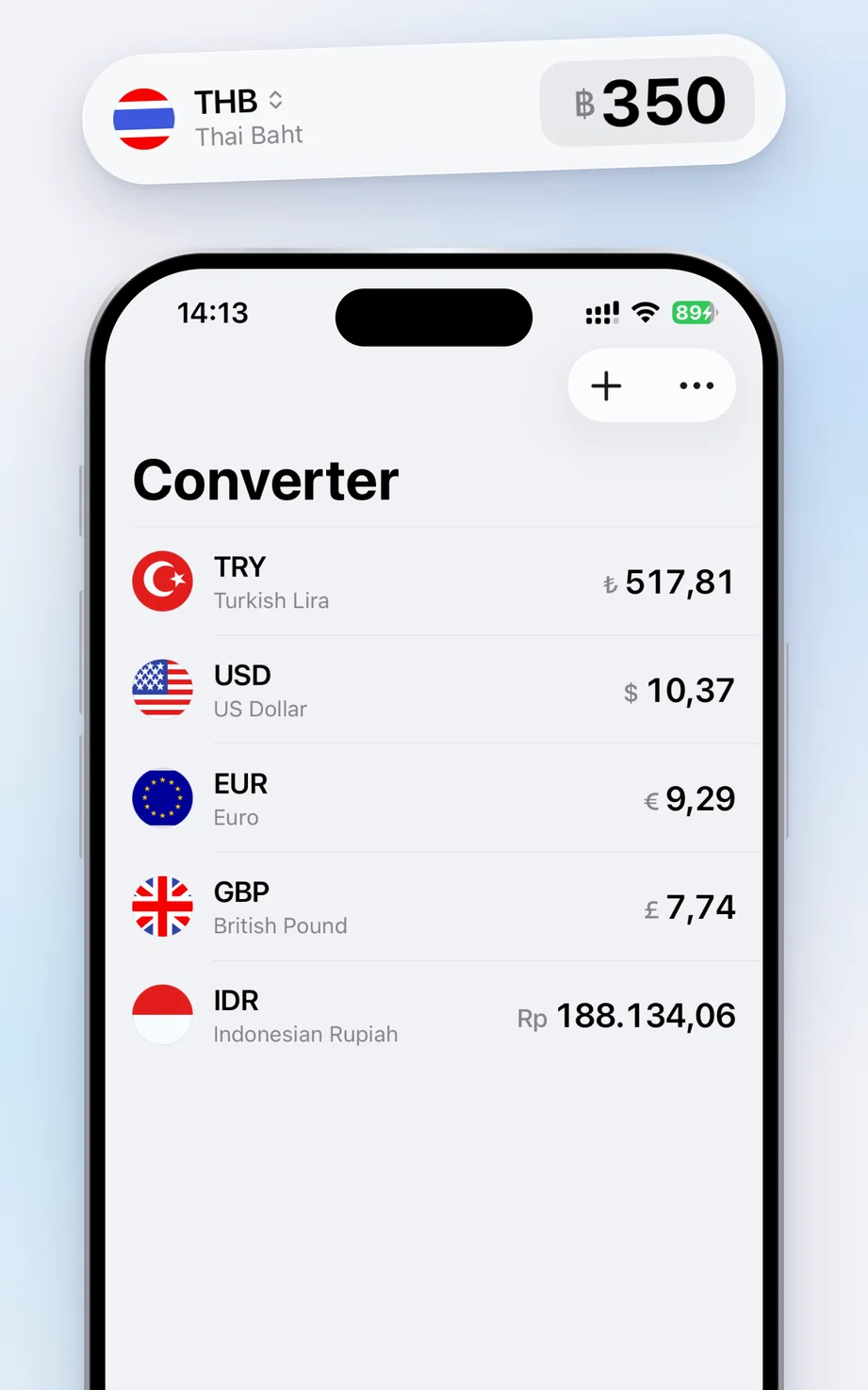
Small units need more digits
When one unit of a currency is worth very little, two decimals can hide it. At the rate in that screenshot, one rupiah is about 0.00006 dollars, which rounds to 0.00 at two decimals.
Choosing your decimals in the app
Currency Converter lets you choose from 0 to 4 decimal places in Settings. Zero gives you a clean list for quick estimates, two matches most receipts, and three or four help with dinars or small rates. Very small amounts show extra digits whatever you choose, so they never round down to zero.